
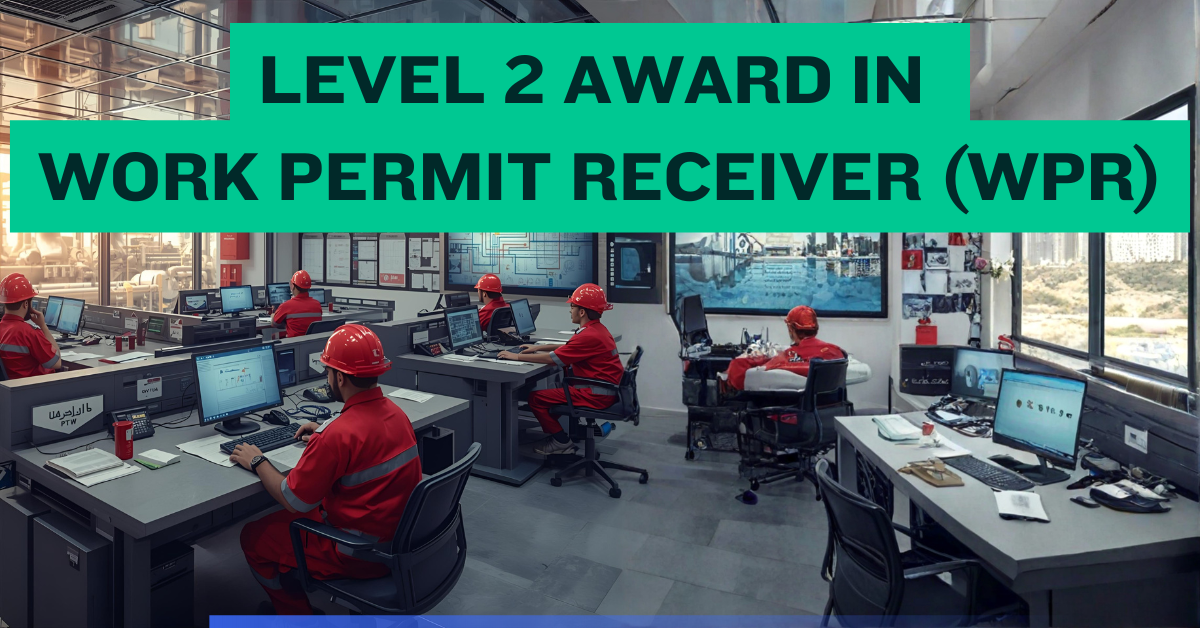
Level 2 Award in Work Permit Receiver (WPR)

Study Units
Introduction to Permit-to-Work Systems
Purpose, scope, and importance in industrial safety.
Regulatory and organizational frameworks.
Types of Work Permits
Hot Work, Cold Work, Confined Space, Electrical, Excavation, Height, and Radiography.
Safety requirements, hazards, and examples for each type.
Roles and Responsibilities
Functions of Issuer, Receiver, and Performing Authority.
Receiver’s accountability in permit compliance and worksite safety.
Work Permit Receiving and Validation Process
Steps for permit acceptance, risk verification, and field readiness checks.
Use of job safety analysis (JSA), isolation certificates, and gas test reports.
Execution, Monitoring, and Closure
Ensuring continuous compliance during operations.
Managing multiple permits, deviations, and handovers.
Procedures for extension, suspension, and closure of permits.
The competency targets of the Level 2 Award in Work Permit Receiver (WPR) focus on developing both knowledge and practical capability required to safely receive, validate, and execute work permits in industrial environments. Learners will gain a clear understanding of the purpose, structure, and importance of the permit-to-work (PTW) system; identify and apply various permit types such as hot work, cold work, confined space, electrical, excavation, and height permits; and understand their associated hazards and control measures. They will demonstrate the ability to interpret permit documents, verify site readiness, ensure isolation and gas testing compliance, and maintain effective communication with the issuer and work team throughout the permit’s lifecycle. Competence will also include accurate documentation, adherence to safety procedures, and active participation in toolbox talks, thereby ensuring that all work is performed under controlled, authorized, and safe conditions aligned with Gulf and international industrial standards.
Who is this designed for?
This qualification is ideal for:
• Technicians, operators, and foremen involved in permitted work.
• HSE officers and supervisors in oil & gas, power, and industrial projects.
• Contractors seeking approval for client-mandated WPR certification.
• Individuals preparing for Gulf job requirements where WPR cards are mandatory.
Our assessment process is designed to ensure every learner achieves the required level of knowledge, skills, and understanding outlined in each course unit.
Purpose of Assessment
Assessment helps measure how well a learner has met the learning outcomes. It ensures consistency, quality, and fairness across all learners.
What Learners Need to Do
Learners must provide clear evidence that shows they have met all the learning outcomes and assessment criteria for each unit. This evidence can take different forms depending on the course and type of learning.
Types of Acceptable Evidence
Assignments, reports, or projects
Worksheets or written tasks
Portfolios of practical work
Answers to oral or written questions
Test or exam papers
Understanding the Structure
Learning outcomes explain what learners should know, understand, or be able to do.
Assessment criteria set the standard learners must meet to achieve each learning outcome.
Assessment Guidelines
All assessment must be authentic, current, and relevant to the unit.
Evidence must match each assessment criterion clearly.
Plagiarism or copied work is not accepted.
All learners must complete assessments within the given timelines.
Where applicable, assessments may be reviewed or verified by internal or external quality assurers.
Full learning outcomes and assessment criteria for each qualification are available from page 8 of the course handbook.
Top Courses
Related Courses


Let's Get in touch
Deleting Course Review
Course Access
This course is password protected. To access it please enter your password below: