
Expert
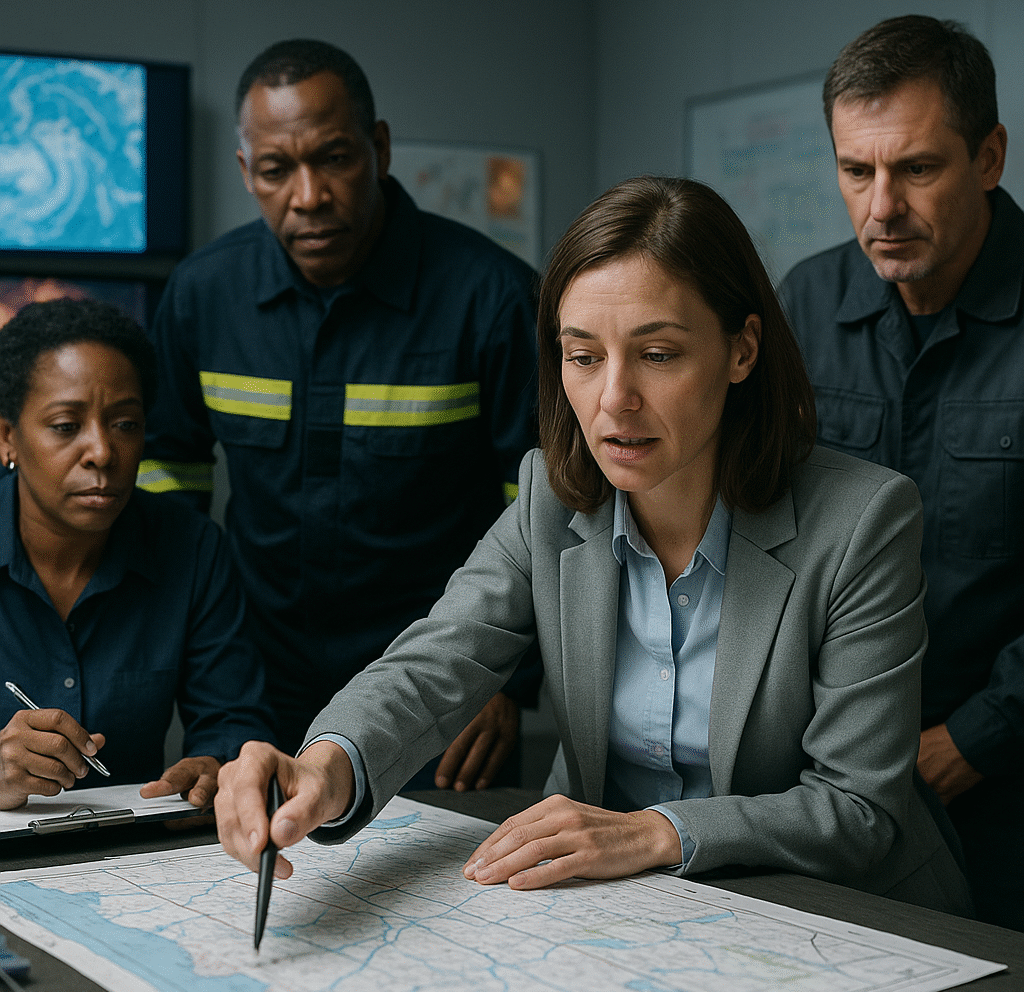
Level 6 Diploma in Strategic Emergency and Disaster Management
Level 6 Diploma in Strategic Emergency and Disaster ManagementCourse OverviewThe Level 6 Diploma in Strategic Emergency and Disaster Management is designed for senior professionals tasked with planning, coordinating, and leading responses to complex emergencies and disasters. This high-level qualification provides learners with the knowledge and leadership capabilities necessary to manage national and international disaster scenarios, develop strategic frameworks, and lead multi-agency response efforts. It is ideal for those working in civil defense, emergency planning, disaster relief, or high-level risk management roles.Benefits
Study Units Breakdown
Who Is This Designed For?
- Develop strategic planning and leadership capabilities for managing large-scale emergencies.
- Understand the application of international frameworks such as the Sendai Framework for Disaster Risk Reduction.
- Gain proficiency in coordinating multi-agency and cross-sector emergency responses.
- Enhance your skills in post-disaster recovery planning and resilience-building.
- Learn how to conduct risk and vulnerability assessments for communities and organizations.
- Build high-level policy and governance understanding in disaster management.
- Evaluate and apply national and international disaster management frameworks.
- Develop and implement strategic emergency and disaster response plans.
- Lead cross-sector and multi-agency collaboration during emergencies.
- Analyze complex disaster scenarios and coordinate appropriate interventions.
- Conduct strategic risk assessments and resource planning.
- Design and oversee post-disaster recovery and community resilience programs.
- Understand ethical, legal, and policy considerations in disaster management.
- Foundations of Strategic Emergency and Disaster Management
- Evolution and principles of disaster management
- Global disaster trends and classifications
- International policies and frameworks (e.g., Sendai Framework)
- Strategic Risk and Vulnerability Assessment
- Hazard identification and community vulnerability mapping
- Risk modeling and scenario analysis
- Strategic mitigation planning
- Disaster Response Operations and Incident Command
- Incident Command System (ICS) and emergency operations centers
- Logistics and resource management
- Crisis response coordination
- Multi-Agency and Cross-Sector Coordination
- Interoperability among emergency services, NGOs, and international bodies
- Communication protocols and coordination mechanisms
- Joint training and simulations
- Crisis Leadership and Decision-Making
- Strategic leadership models in emergencies
- Decision-making under pressure
- Leading diverse response teams
- Post-Disaster Recovery and Resilience Building
- Recovery planning: infrastructure, services, and livelihoods
- Psychosocial recovery and community engagement
- Building long-term resilience and risk reduction
- Policy, Governance, and Legal Frameworks
- Legal obligations and governance structures
- Ethical issues in disaster response and resource allocation
- Policy development and institutional frameworks
- Disaster Scenario Planning and Simulations
- Designing and evaluating disaster response simulations
- Lessons learned and best practices from global case studies
- Future trends in emergency management
| Attribute | Description |
| Qualification Title | Level 6 Diploma in Strategic Emergency and Disaster Management |
| Level | 6 |
| Type | Diploma |
| Total Qualification Time (TQT) | 420 hours |
| Guided Learning Hours (GLH) | 210 hours |
| Credit Value | 42 credits |
| Assessment Method | Assignment-based |
| Grading | Pass/Fail |
| Delivery Mode | Classroom / Online / Blended |
| Unit Title | GLH | TQT | Credit | Assessment Type |
| Foundations of Strategic Emergency and Disaster Management | 26 | 52 | 5.5 | Assignment |
| Strategic Risk and Vulnerability Assessment | 26 | 52 | 5.5 | Assignment |
| Disaster Response Operations and Incident Command | 26 | 52 | 5.5 | Assignment |
| Multi-Agency and Cross-Sector Coordination | 24 | 48 | 5 | Assignment |
| Crisis Leadership and Decision-Making | 24 | 48 | 5 | Assignment |
| Post-Disaster Recovery and Resilience Building | 26 | 52 | 5.5 | Assignment |
| Policy, Governance, and Legal Frameworks | 24 | 48 | 5 | Assignment |
| Disaster Scenario Planning and Simulations | 24 | 48 | 5 | Assignment |
- Senior emergency managers and civil defense professionals
- Disaster response coordinators in government and NGOs
- Risk and resilience consultants
- Military and law enforcement leaders in emergency roles
- Public health and infrastructure planners
- Policy makers and emergency preparedness advisors
- Take on roles such as Director of Emergency Management, Strategic Risk Advisor, or Disaster Operations Lead.
- Work with national governments, UN agencies, disaster relief NGOs, or critical infrastructure companies.
- Progress to postgraduate studies in disaster management, public administration, or crisis leadership.
Qualification Profile
| Attribute | Description |
| Qualification Title | Level 6 Diploma in Strategic Emergency and Disaster Management |
| Level | 6 |
| Type | Diploma |
| Total Qualification Time (TQT) | 420 hours |
| Guided Learning Hours (GLH) | 210 hours |
| Credit Value | 42 credits |
| Assessment Method | Assignment-based |
| Grading | Pass/Fail |
| Delivery Mode | Classroom / Online / Blended |
Study Units Breakdown
| Unit Title | GLH | TQT | Credit | Assessment Type |
| Foundations of Strategic Emergency and Disaster Management | 26 | 52 | 5.5 | Assignment |
| Strategic Risk and Vulnerability Assessment | 26 | 52 | 5.5 | Assignment |
| Disaster Response Operations and Incident Command | 26 | 52 | 5.5 | Assignment |
| Multi-Agency and Cross-Sector Coordination | 24 | 48 | 5 | Assignment |
| Crisis Leadership and Decision-Making | 24 | 48 | 5 | Assignment |
| Post-Disaster Recovery and Resilience Building | 26 | 52 | 5.5 | Assignment |
| Policy, Governance, and Legal Frameworks | 24 | 48 | 5 | Assignment |
| Disaster Scenario Planning and Simulations | 24 | 48 | 5 | Assignment |
Upon completing this diploma, learners will be able to:
- Evaluate and apply national and international disaster management frameworks.
- Develop and implement strategic emergency and disaster response plans.
- Lead cross-sector and multi-agency collaboration during emergencies.
- Analyze complex disaster scenarios and coordinate appropriate interventions.
- Conduct strategic risk assessments and resource planning.
- Design and oversee post-disaster recovery and community resilience programs.
- Understand ethical, legal, and policy considerations in disaster management.
Who Is This Designed For?
- Senior emergency managers and civil defense professionals
- Disaster response coordinators in government and NGOs
- Risk and resilience consultants
- Military and law enforcement leaders in emergency roles
- Public health and infrastructure planners
- Policy makers and emergency preparedness advisors
Assessment Type: Assignments Based
Top Courses
Related Courses



Let's Get in touch
Deleting Course Review
Are you sure? You can't restore this back
Course Access
This course is password protected. To access it please enter your password below: